Introduction
Walk into any skincare store today, and you will probably see one word again and again: serum. Vitamin C serum, hyaluronic acid serum, peptide serum, retinol serum, glow serum, dark spot serum — the list can feel endless.
But here is the simple truth: a serum is not just another pretty bottle on the shelf. It is usually a lightweight, concentrated skincare product designed to deliver active ingredients more directly to the skin. That is why many people use it to target concerns such as dryness, dullness, dark spots, fine lines, uneven skin tone, or early signs of aging.
The confusing part is not whether a serum is useful. The confusing part is choosing the right one. Some formulas are made for brightening. Some focus on hydration. Others are designed for wrinkles, discoloration, sensitive skin, or men’s skincare routines.
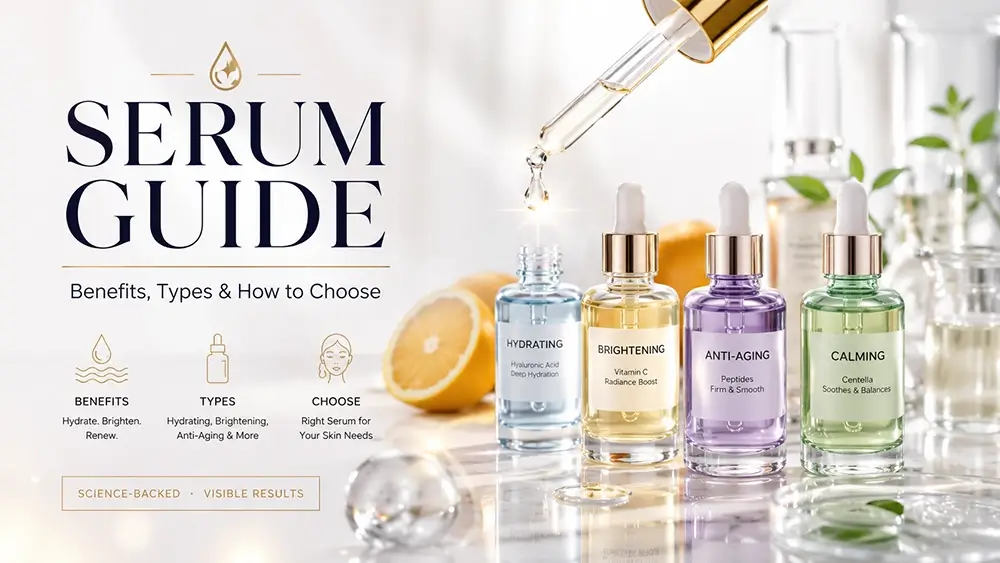
In this guide, we will break it down in a simple way. You will learn what a serum is, why it matters, how different types work, when to apply it, and how quality cosmetic serums move from formula development to clean, accurate filling and packaging.
What Is a Serum, and Why Should You Use One?
A serum is a skincare product with a high concentration of active ingredients. Compared with a basic cream or lotion, it is usually lighter in texture and designed to absorb quickly into the skin.
So, what is serum used for? In most routines, serum is used after cleansing and before moisturizer. It gives your skin targeted support before you seal everything in with a cream or lotion.
The best face serum is not the same for everyone. For someone with dry skin, a hydrating serum may be the best choice. For someone with dullness or pigmentation, a vitamin C serum may make more sense.
The biggest reason people add serum to their routine is focus. Instead of using a single product for everything, you can choose a formula that targets a specific concern more directly.

The Science Behind Serum
A serum works because of its formula structure. Most serums are made with smaller or lightweight ingredients that can spread easily across the skin and absorb faster than heavier creams.
This does not mean every serum works like magic. The real result depends on the active ingredient, formula stability, concentration, skin type, and how consistently you use it.
For example, vitamin C serum benefits are usually connected with brightening and antioxidant support. Hyaluronic acid serum is known for hydration. Retinol serum is often used for anti-aging routines.
In short, the science behind serum is simple: choose the right active ingredient, apply it correctly, and give your skin enough time to respond.
Key Benefits of Incorporating a Serum into Your Routine
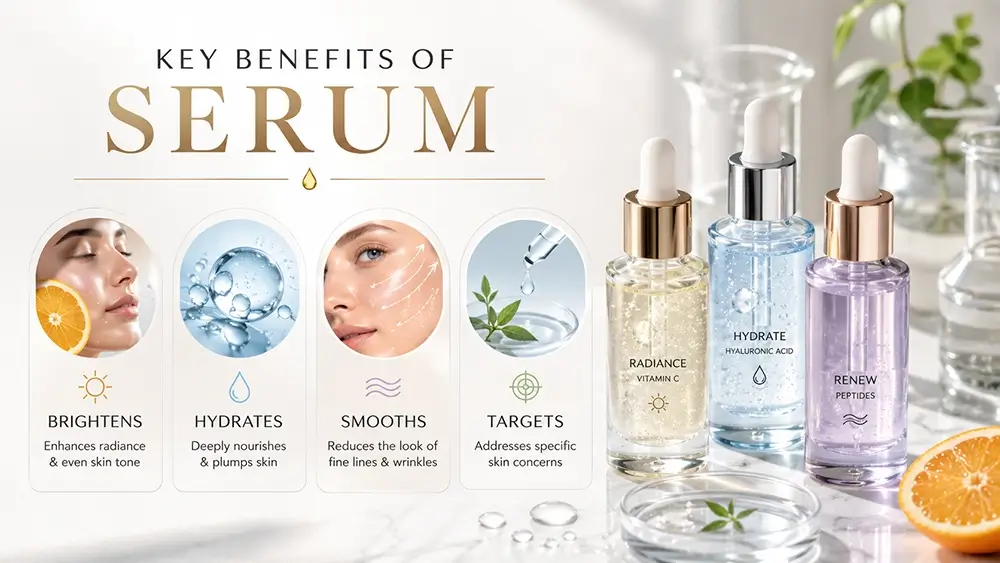
Adding a serum to your skincare routine can make your routine more targeted. Instead of relying only on cleanser and moisturizer, you can address specific skin concerns with a more focused formula.
Different serums offer different benefits, so the best option depends on what your skin needs most.
Brightening and Even Skin Tone
If your main concern is dullness, uneven tone, or pigmentation, a vitamin C serum is often a good place to start. Vitamin C serum benefits may include brighter-looking skin, improved radiance, and support against visible dark spots.
A glow serum is usually designed to make the skin look fresher and more luminous. Some formulas combine vitamin C with other brightening ingredients to support a more even skin tone.
For pigmentation concerns, a dark spot serum or vitamin C serum for dark spots may be more suitable. These formulas are usually used consistently over time rather than as a quick overnight fix.
Deep Hydration and Plumping
If your skin feels tight, dry, or tired, a hydrating serum can help bring moisture back into the routine. Many hydrating formulas include hyaluronic acid, which is widely used for water-binding support.
The best hyaluronic acid serum is usually lightweight, comfortable, and easy to layer under moisturizer. It does not replace moisturizer, but it can help improve the skin’s hydrated look and feel.
For dry skin, a serum with hydrating ingredients can make the next moisturizer work better. This is why many people use a hydrating serum morning and night.
Anti-Aging and Wrinkle Reduction
For fine lines, wrinkles, and loss of firmness, an anti-aging serum may be a better fit. Popular options include peptide serum, retinol serum, and formulas designed for mature skin.
The best anti-aging serum for wrinkles often depends on skin tolerance. Retinol can be effective, but it may not be suitable for everyone at the beginning. A peptide serum is often seen as a gentler option for supporting smoother-looking skin.
People searching for the best anti-aging serum for 50s or best anti-aging serum for 60s often need formulas that support hydration, firmness, and skin barrier comfort at the same time.
Targeted Treatments for Specific Concerns
Not every serum is made for the whole face. Some are designed for very specific needs.
A discoloration-correcting serum focuses on uneven color and visible spots. An exfoliating serum may include gentle acids to support smoother texture. An eye serum or best eye serum is made for the delicate eye area, where texture and sensitivity are different from the rest of the face.
This is where serum becomes especially useful. You can choose one product for the face, another for the eye area, and another for specific pigmentation or texture concerns.
How to Choose the Best Serum for Your Skin Type
Choosing the best serum is easier when you start with your skin concern instead of the trend. A popular product may not be the right one for your skin.
Before buying, ask yourself one question: what do I want this serum to improve? Brightness, dryness, wrinkles, dark spots, sensitivity, texture, or overall glow?
Vitamin C Serums: The Gold Standard for Brightening
Vitamin C serums are popular because they are strongly connected with brightening and antioxidant skincare. If your goal is a more radiant complexion, the best vitamin C serum may be a smart choice.
For daily skincare, many people look for the best vitamin C serum for face or vitamin C serum for face because they want something light, layerable, and suitable under sunscreen.
If your skin is sensitive, the best vitamin C serum for sensitive skin may use a gentler vitamin C derivative or a lower concentration. If you prefer a stronger formula, a best L-ascorbic acid serum may be more suitable, but it also needs better formula stability.
Anti-Aging Serums by Age Group
Anti-aging needs can change with age. In your 30s or 40s, you may focus on early fine lines and prevention. Later, hydration, firmness, and wrinkle care may become more important.
The best anti-aging serum for 50s often combines moisture support with ingredients that help improve the look of firmness and texture. For mature skin, comfort matters just as much as strength.
The best anti-aging serum for 60s is usually not about chasing the strongest formula. It is about choosing a serum that supports aging skin without causing dryness, irritation, or barrier stress.
Serums for Specialized Needs
Some people need more targeted products. A face serum for men may focus on oil control, hydration, shaving-related dryness, or simple daily use.
A body serum is becoming more popular as body care becomes more like facial skincare. It may target dryness, dullness, rough texture, or uneven tone on arms, legs, and body areas.
If you are just starting, the best face serum is usually one that matches your top concern and feels easy enough to use consistently. The product you can use regularly is often better than the “perfect” product you keep forgetting to apply.
How and When to Apply Your Serum Correctly
A serum should usually be applied after cleansing and before moisturizer. If you use toner, the order is normally cleanser, toner, serum, moisturizer, and sunscreen in the morning.
Many people ask when to use vitamin C serum. In most routines, vitamin C is commonly used in the morning because it pairs well with sunscreen. That said, whether vitamin C serum in the morning or night is better depends on the formula and your skin tolerance.
Use only a small amount. More serum does not always mean better results. A few drops or one pump is often enough for the face.
If you are using stronger ingredients like retinol or exfoliating acids, introduce them slowly. This helps your skin adjust and reduces the chance of irritation.
For packaging-related products, you may also be interested in how small bottles and vials are handled in a vial filling process.

From Formula to Bottle: Manufacturing Quality Serums
A good serum is not only about the formula. It also needs clean, accurate, and stable filling during production.
In cosmetic manufacturing, serum products are often filled into dropper bottles, airless pump bottles, ampoules, small glass vials, or other small containers. These packages usually require accurate filling because the product volume is small and the formula value is high.
For brands and manufacturers, this is where a Pharmaceutical and Cosmetic Filling Machine becomes important. Accurate filling helps reduce waste, keep the bottle appearance consistent, and support better production quality.
XUEFILL provides filling solutions for cosmetic serums, pharmaceutical liquids, reagents, oral liquids, and other small-dose fluid products. For manufacturers producing serum at scale, the right filling system can make the process cleaner, more repeatable, and easier to control.

Conclusion
A serum can be one of the most useful products in a skincare routine, but only when it is chosen with a clear purpose. If you want brightness, vitamin C may be a good option. If you want hydration, hyaluronic acid may be better. If you care about wrinkles, peptide or retinol formulas may be worth considering.
The same idea applies to production. A quality serum needs not only a good formula, but also clean packaging, accurate filling, and reliable bottle handling. From skincare use to manufacturing, every step affects the final experience.
If you are producing cosmetic serum, skincare liquids, ampoules, or small-bottle beauty products, you can get in touch with XUEFILL to discuss a suitable filling solution for your product.